


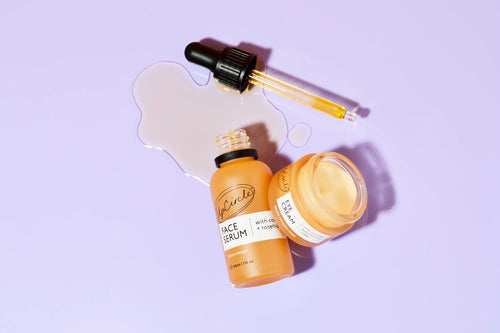

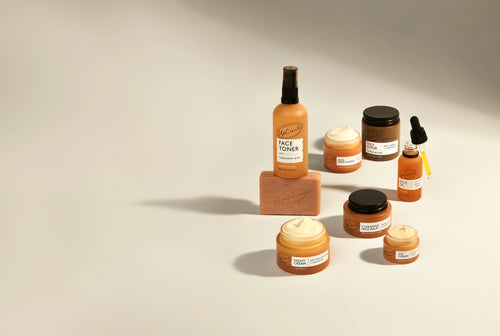


Making purchasing choices that align with your ethics and values can be tricky, especially as the way products are labelled can differ massively. Do you really know what these labels mean? Natural, organic, clean beauty, sustainable – what sets them apart?
These labels are everywhere, on packaging, in marketing, across social media, but they are rarely explained in a way that helps you make confident choices. They aren’t bad or inherently misleading – we use some of these labels!
But it can be confusing when brands don’t explain how they fit these labels:
- Are they plastic-free, or plastic-negative?
- Their products are sustainable, but is their packaging also sustainable?
- They say they’re cruelty-free, but are they Leaping Bunny certified?
We’ve already decoded eco-certifications like “B-Corp” and “vegan”, so we wanted to dive into these labels too. We’ll break down the differences between natural, organic and clean beauty, so you can understand what the label is really telling you – and probably more importantly, what it doesn’t.
What does “natural” really mean in skincare?
In beauty, “natural” usually refers to ingredients derived solely from plants, minerals or other naturally occurring sources. Oils, butters, clays and other botanical extracts can all fall under this umbrella.
Where things can get confusing is that “natural” isn’t a legally regulated term in skincare. That means there’s no universal standard for how much of a product must be natural, or how those ingredients are processed. A formula might contain natural ingredients but still rely on stabilizers or preservatives to make it safe and effective – is this natural?
We know that natural ingredients can be incredibly beneficial, but is that enough? Typically, the label alone doesn’t tell you how responsibly the ingredients were sourced, how sustainable the formula is, or how well it will actually perform on your skin.
At UpCircle, natural ingredients are chosen for what they do, not just how they sound. We also want you to know why our ingredients (especially our upcycled ones) are selected, and importantly, how they are sourced.
It’s important to know what percentage of ingredients in your product are natural if it’s claiming to be a “natural” product. Let’s look at some of our best sellers:
- Cleansing Face Balm: 100% natural ingredients.
- Eye Cream: 99% natural ingredients.
- Peptide Serum: 93% natural ingredients.
Bringing biotech into the conversation
Some of the formulas in our range have a slightly lower percentage of natural ingredients because they include modern biotech actives.
These ingredients are made using processes like fermentation or cell-culture, which allow us to create high-performance ingredients without harvesting large amounts of plants (which requires a lot of land and water) or using animal sources. In many cases, this actually makes them more sustainable, purer, and more stable than traditionally farmed ingredients.
Lab-grown and biotech ingredients are often:
- Extremely pure and consistent, with no pesticides or heavy metals.
- More stable, so they work better and last longer in formulas.
- Much lower impact, using far less land, water and energy to produce.
For example, instead of farming acres of crops or relying on animal sources, ingredients such as oils, peptides or collagen-like actives can now be produced through fermentation. This significantly reduces pressure on land, water and biodiversity, and lowers carbon footprints.
Many biotech ingredients are also biomimetic, meaning they closely mimic the skin’s natural structure and functions. This allows them to integrate seamlessly into formulas and support the skin more effectively.
So while these ingredients may slightly lower the headline “natural percentage”, they’re included very intentionally – because they allow us to combine science-backed performance, skin compatibility, and genuinely lower environmental impact.
For us, sustainability isn’t just about a number on a label; it’s about making responsible choices that are better for skin and the planet.
What makes a beauty product organic?
Organic ingredients are grown on an organic farm without synthetic pesticides, fertilizers or genetically modified organisms. Certified organic farmers and businesses must ensure that their products and ingredients support the health of wildlife, nature, and people.
The Soil Association has a strict set of standards for organic skincare, haircare, products for the home, and other categories. COSMOS is the global standard for organic cosmetics, established by the Soil Association Certification and four other organizations.
All products with the Soil Association COSMOS logo guarantee:
- No animal testing
- No GM (genetically modified) ingredients
- No controversial chemicals
- No parabens or phthalates
- No synthetic colors, dyes or fragrances
- Packaging must be recycled and recyclable where possible
- All palm oil comes from sustainable sources
UpCircle note: As a brand, we are completely palm oil free. Find out why palm oil is bad for the environment on our blog.
Organic ingredients offer reassurance around farming practices and environmental impact. However, organic certification doesn’t automatically mean a product is better for your skin – or that it’s suitable for everyone.
Some ingredients simply can’t be organic, and some formulas need these non-organic components to stay stable, safe and effective. That’s why many well-formulated products combine organic ingredients with responsibly sourced non-organic ones.
- Our Face Oil with Coffee Extract is 98% organic and 100% natural.
- Our Muslin Face Cloths are 100% Soil Association and GOTS (Global Organic Textile Standard) Certified Organic.
UpCircle’s organic products
By now, you might know that every single UpCircle product is made with upcycled ingredients – from coffee grounds, chai spices, and fruit peels to pulp, stones, flower petals and stems – giving them a new lease of life. This double life makes it difficult to become certified organic, though. We’re Soil Association and COSMOS certified organic, but many of our products contain over 50% upcycled ingredients, meaning they can’t be certified. Thankfully, the industry is catching up, but it’s taken a lot of pushing and patience.
We certify our products where possible, but our commitment to circular economy principles sometimes means this is not possible – but that doesn’t mean the ingredients are not organic. Ethical sourcing will always be a top priority at UpCircle.
Let’s look at our signature coffee scrub range, which is formulated from used coffee grounds that we collect from numerous artisan coffee shops. We carefully choose coffee shops based on their ethics and the quality of the coffee, for example, if it is fair trade and organic. However, because the upcycled coffee makes up over half of the overall formulations, we are not able to certify the products, despite the ingredients being organic.
Similarly, our choice of manufacturers is based on their commitment to being certified organic. So even if our products are not certified because of our use of upcycled ingredients, we promote a circular economy, and the ingredients are organic where possible.
Natural vs organic: the takeaway
Natural and organic might seem like the same thing at first glance – and are often used interchangeably – but they are not the same.
- Natural: A non-legally regulated term for ingredients derived from plants, minerals or other naturally occurring sources. Remember, natural ingredients might still be processed or combined with stabilizers.
- Organic: Ingredients produced without synthetic pesticides or fertilizers, but certification typically applies to individual ingredients rather than the finished product.
Organic ingredients are always natural, but natural ingredients aren’t always organic – and neither label guarantees better results on its own.
What are clean beauty products?
Clean beauty tends to focus less on where ingredients come from and more on what’s left out. They are generally formulated without any potentially toxic ingredients that could cause harm, but this is a blurry line.
Like natural beauty, “clean beauty” doesn’t have one strict legal definition, nor a certification. Different brands draw the line in different places, which is why ingredient lists matter more than the label itself. It’s essential that the brand behind a product dubbed “clean beauty” is transparent about how the product is “clean”.
Here, it can be really helpful to look at the certifications a brand does have: organic, cruelty-free, vegan, B-Corp, and plastic negative.
As transparency is key, we think it’s important to give you information about exactly why we use our upcycled ingredients, from prickly pear extract and blueberry to hemp seed oil and raspberry seed oil.
So which should you choose?
There’s no single label that automatically makes a product better. Instead of chasing buzzwords, it’s more helpful to look for:
- Clear, honest ingredient lists
- Evidence-backed formulations
- Ethical sourcing and sustainability practices
- Products that suit your skin type and concerns
Where UpCircle fits
We don’t formulate to fit trends. Each of our products is built around high-performing, upcycled ingredients that reduce waste while delivering real, evidence-backed results.
By combining natural, ethically sourced ingredients with transparent, science-led formulation, we create skincare that is effective, sustainable and contributes to a less wasteful world.
See our values and our zero tolerance for animal testing policy.
Shop our full collection of products formulated for you, with the planet in mind.